High Pressure RHEED-PLD System > PLD
-
제품 정보
제품 상세설명
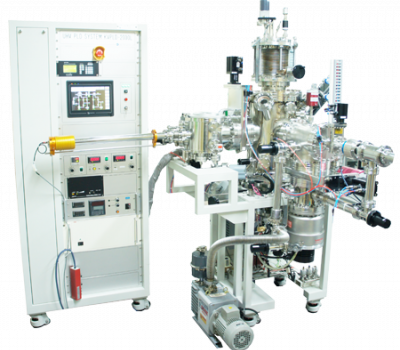
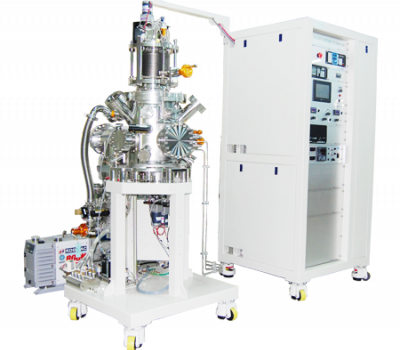
The Core of Next-Generation Advanced New Material Research: High Pressure RHEED-PLD System
Generally, due to the nature of electrons, RHEED operate only in ultra-high vacuum (UHV) conditions. However, growing high-quality oxide thin films using PLD requires a relatively high oxygen partial pressure (High Pressure) environment.
Developed to resolve this contradiction, the High Pressure RHEED utilizes differential pumping technology to enable real-time (in-situ) monitoring of the thin film growth process, ensuring that the moment of growth is not missed.
Key Advantages and Features of the System
1. Real-time Monitoring in High Pressure Environments (In-situ Analysis):
RHEED patterns can be clearly observed even in environments with high background gas (oxygen, etc.) pressures ranging from a few mTorr to tens of mTorr. Changes in crystal structure occurring during thin film growth can be identified immediately. 2. Ultra-precision thickness control at the atomic layer level:
By analyzing the intensity oscillation of the RHEED pattern in real time, it is possible to accurately calculate and control the growth of the thin film on an atomic layer-by-layer basis. This enables the fabrication of superlattice and heterostructure thin films.
3. Optimized for the growth of complex oxides and novel materials:
It is optimized for synthesizing highly crystalline ferroelectric, ferromagnetic, and superconducting thin films with minimized oxygen vacancies, as it allows for perfect control of high-temperature, high-pressure oxygen environments.
4. High reproducibility and reduced process optimization time:
Since the growth process can be directly visualized and variables such as laser energy, substrate temperature, and gas pressure can be adjusted immediately, it dramatically reduces the time and cost required to establish process conditions for new materials. Major Applications
1. Next-Generation Oxide Electronics: Development of Resistive Random Access Memory (ReRAM), transparent display devices, and oxide semiconductors
2. Superconductor and Ferroelectric Research: Fabrication of high-temperature superconducting thin films and piezoelectric/ferroelectric thin film devices
3. Quantum Materials and Spintronics: Research on topological insulators and magnetic oxide-based spin devices
4. New Energy Materials: Research on solid electrolytes and catalytic thin films for high-efficiency fuel cells (SOFC) and all-solid-state batteries
The Core of Next-Generation Advanced New Material Research: High Pressure RHEED-PLD System
Generally, due to the nature of electrons, RHEED operate only in ultra-high vacuum (UHV) conditions. However, growing high-quality oxide thin films using PLD requires a relatively high oxygen partial pressure (High Pressure) environment.
Developed to resolve this contradiction, the High Pressure RHEED utilizes differential pumping technology to enable real-time (in-situ) monitoring of the thin film growth process, ensuring that the moment of growth is not missed.
Key Advantages and Features of the System
1. Real-time Monitoring in High Pressure Environments (In-situ Analysis):
RHEED patterns can be clearly observed even in environments with high background gas (oxygen, etc.) pressures ranging from a few mTorr to tens of mTorr. Changes in crystal structure occurring during thin film growth can be identified immediately. 2. Ultra-precision thickness control at the atomic layer level:
By analyzing the intensity oscillation of the RHEED pattern in real time, it is possible to accurately calculate and control the growth of the thin film on an atomic layer-by-layer basis. This enables the fabrication of superlattice and heterostructure thin films.
3. Optimized for the growth of complex oxides and novel materials:
It is optimized for synthesizing highly crystalline ferroelectric, ferromagnetic, and superconducting thin films with minimized oxygen vacancies, as it allows for perfect control of high-temperature, high-pressure oxygen environments.
4. High reproducibility and reduced process optimization time:
Since the growth process can be directly visualized and variables such as laser energy, substrate temperature, and gas pressure can be adjusted immediately, it dramatically reduces the time and cost required to establish process conditions for new materials. Major Applications
1. Next-Generation Oxide Electronics: Development of Resistive Random Access Memory (ReRAM), transparent display devices, and oxide semiconductors
2. Superconductor and Ferroelectric Research: Fabrication of high-temperature superconducting thin films and piezoelectric/ferroelectric thin film devices
3. Quantum Materials and Spintronics: Research on topological insulators and magnetic oxide-based spin devices
4. New Energy Materials: Research on solid electrolytes and catalytic thin films for high-efficiency fuel cells (SOFC) and all-solid-state batteries
-
Specifications
제품 Specifications
For further inquiries, please contact our company.
For further inquiries, please contact our company.
-
Options
제품 Options
For further inquiries, please contact our company.
For further inquiries, please contact our company.
-
Control
제품 Control
For further inquiries, please contact our company.
For further inquiries, please contact our company.
-
사용후기
-
상품문의
-
배송/교환정보
[배송]
배송 안내 입력전입니다.[교환]
교환/반품 안내 입력전입니다.
선택된 옵션
-
High Pressure RHEED-PLD System+0원